
By Kris Cummings & Tom Abel
Community-serving organizations balance changing needs and opportunities with limited time and resources. People care deeply about the mission and the work, and choosing where to focus can be difficult when so much matters. Staying connected to people who care about or are affected by the work helps clarify what matters and where efforts could make a difference.
Many organizations already put considerable care into these relationships. They listen to experiences and invite ideas about what could improve. These conversations give people room to explore what they hope for and which changes would help. Together, they can consider how they might contribute and what is possible within the organization’s purpose and resources.
Engagement gives people a meaningful part in shaping what happens next. They may share insight, influence choices, help put ideas into practice, or stay involved as work unfolds. Through these contributions, organizations and communities create value in what they accomplish together and in the relationships and commitment they build along the way.
What Does It Mean to Engage and Create Value with Communities?
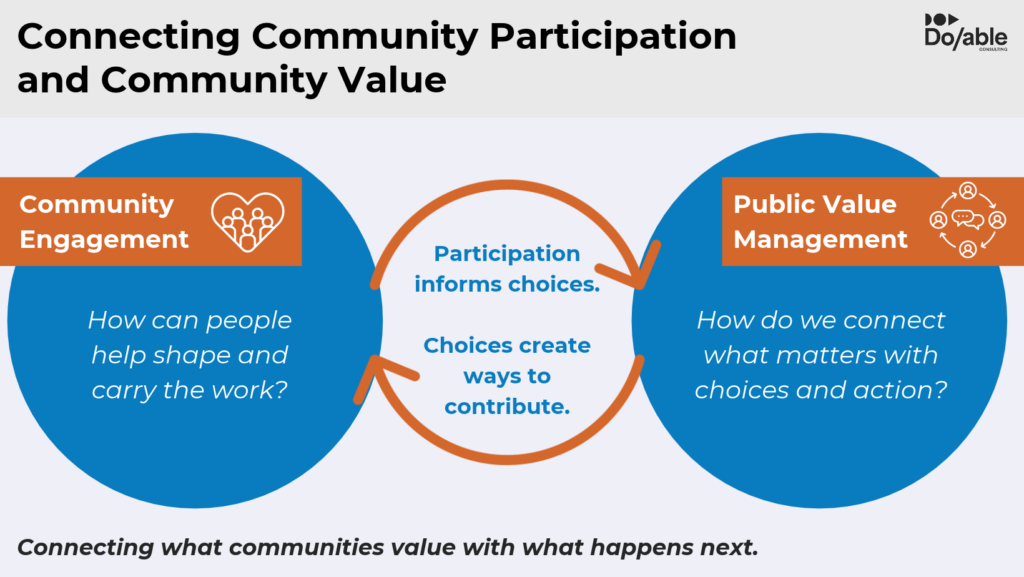
Community engagement builds two-way relationships and opportunities for participation with people interested in or affected by an organization’s work. This includes people using services, staff, volunteers, donors, partners, and other community members. People may share feedback, shape decisions, advocate for change, contribute time or resources, or stay involved over time.
People bring different kinds of knowledge and different ways to contribute. Staff understand services through their practice, and people using them know how those services fit into their lives. Volunteers and donors may bring commitment, relationships, skills, and ideas. These perspectives can overlap; together they help clarify what matters and what might help.
Engagement can improve people’s experiences of services when they help shape them. It also creates ways to volunteer, give, advocate, or work with others on a shared priority. Some participation centres on a particular decision; other relationships deepen over time. People need to understand what they can influence or contribute and have genuine choices about taking part.
Creating community value means understanding what makes a meaningful difference for people and communities. Public value management connects that understanding to choices about what to prioritize, who is responsible, and how to use resources. It also guides action and learning as the work continues. Those choices draw on community perspectives alongside mission, evidence, and capacity. We explored this approach in an earlier post, Public Value Management: Delivering Value in a Sustainable Way.
Community engagement creates ways for people to participate, from a single conversation to ongoing roles in decisions, action, and learning. Public value management helps connect those contributions to shared priorities and responsible choices. Each informs the other as relationships and circumstances evolve.
Our Approach: Connecting Community Participation to Meaningful Action
When people participate, they bring their experiences, interests, and hopes about what might come from taking part. How their contributions are received, and what happens afterward, can shape whether they want to stay involved.
Do/able helps organizations design community engagement and public value approaches that fit their purpose, relationships, and capacity. The work might begin with a service decision or partnership, or form part of a broader organizational strategy. Drawing on organization development, we help connect people’s participation to decisions, roles, resources, and ways of working that help people influence and contribute to what happens next.
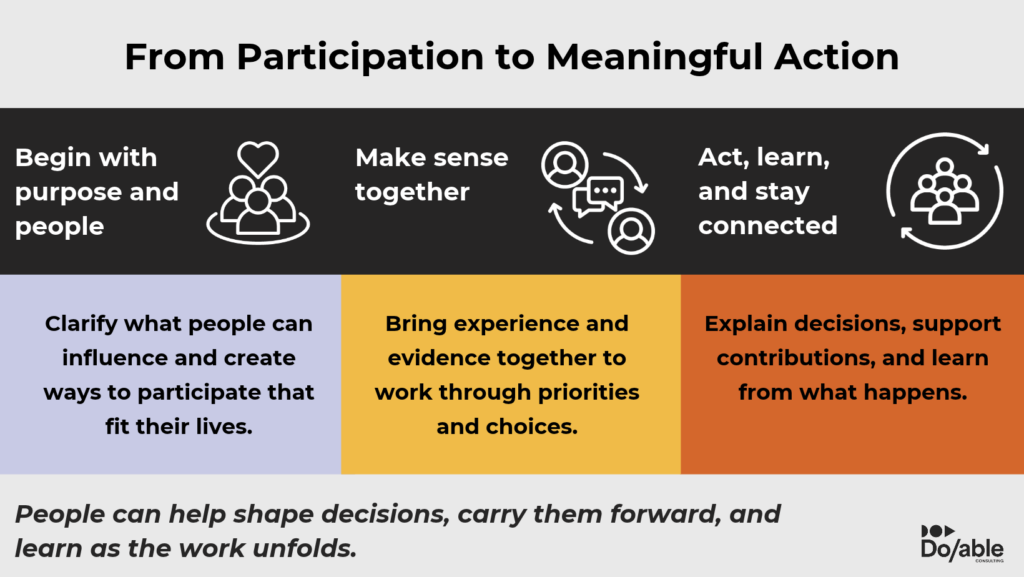
Begin with purpose, people, and relationships
People can contribute more meaningfully when they understand the work’s purpose, what they can influence, and what participation involves. Early conversations clarify what needs to be understood or decided and what people hope the work could make possible. Being open about responsibilities and limits shows where people can shape decisions, offer support, or help carry work forward.
Existing relationships offer a useful place to begin. There may also be people whose experiences are less familiar to the organization or whose voices have been underheard. Practical barriers, previous experiences, or uncertainty about whether speaking up will make a difference can all affect someone’s willingness to take part.
An individual conversation may give someone room to share an experience they might find difficult to raise in a group. Shared discussion may help people understand different perspectives. Facilitation also involves bringing underheard voices into the conversation and ensuring they receive attention, particularly when participants hold different levels of authority or influence.
Participation may be short-term, periodic, or ongoing. Some people join a consultation or a design group. Others may prefer an advisory role, a volunteer opportunity, a partnership, or helping put plans into practice and learning from what happens. A useful engagement strategy helps people see these possibilities while allowing them to change how they participate or step back.
Make sense of what matters, together
What people share can reveal common concerns and different views of what creates value. Looking at findings together gives people a chance to test what rings true and identify what is missing. We help people consider knowledge gained through lived and living experience alongside knowledge from day-to-day practice and other evidence. Together, they can explore which priorities to pursue, how people might contribute, and what those choices would mean for the time and resources available.
An organization may remain responsible for a final decision while inviting people to help shape it. Being clear about that gives everyone a better understanding of their role. Even when some suggestions can’t be acted on, working through the choices together can help people understand how a decision was reached and where their contributions made a difference.
Turn decisions into action, and keep participation going
After people have contributed, they want to know what their involvement helped make possible. Sharing progress and explaining how their contributions shaped the work helps keep that connection alive. It also creates an opportunity to explain what could not be taken forward and why.
The next steps will depend on the work. They might involve improving a service, shaping strategic priorities, organizing volunteer contributions, or building support for a community change. We help organizations connect decisions with practical action, clarify who can play which roles, and create opportunities for people who want to contribute beyond the initial engagement.
As an initiative gets underway, people may help carry it out or share how people are experiencing the changes. They may also help interpret results and suggest adjustments. Others may join later, as opportunities emerge. Keeping those pathways open allows participation to change with the work and with people’s interests and circumstances.
Ongoing participation takes attention. Staff need time and authority to support relationships, follow through, and close the loop with participants. People need worthwhile ways to contribute that are accessible and fit their lives. We help organizations develop the roles, routines, and resources that make this possible, starting small where that makes sense.
What Becomes Possible When Communities Help Shape and Carry the Work?
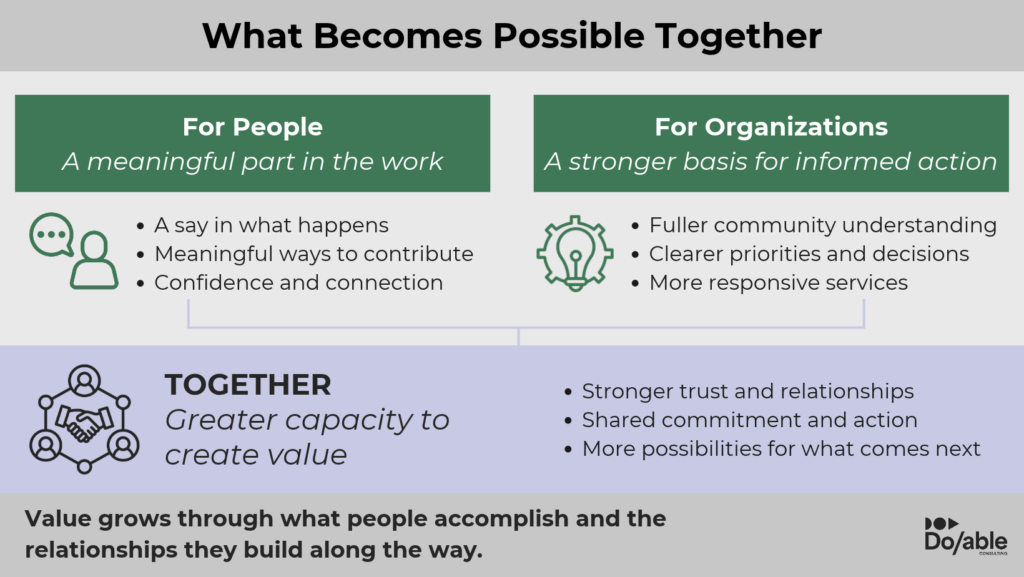
When people can influence and contribute to the work, organizations gain a fuller understanding of what communities value. Priorities may become clearer, services can better reflect people’s experiences, and decisions about resources have a stronger basis. People can also help turn those decisions into action and learn together whether their efforts are making a difference.
Being heard and having meaningful ways to contribute can build people’s confidence that they can make a difference and help them feel part of a shared effort. People may see their knowledge reflected in a decision, experience a better service, or play an active part in something they care about.
For organizations, sustained relationships can bring insight and connections into the work, along with people’s commitment to its success. People may contribute through advocacy, volunteering, or philanthropy. These contributions work best when they reflect people’s own interests and the organization can support their involvement.
The value comes from the services and changes that result, and from what people build together along the way. Trust, shared understanding, and experience of working together can make future choices easier to work through. They may also open possibilities for what organizations and communities can accomplish together.
Let’s Keep the Conversation Going
There are people who already care about your organization’s work. Where might they want a greater say, and how would they like to contribute? An existing decision, service, or relationship can be a good place to begin or to build on how people are already involved.
At Do/able, we help organizations build community engagement and public value approaches that connect participation to choices, contributions, and ongoing learning. If you’re wondering what that could look like in your organization, we’d be glad to hear what you’re thinking and talk it through with you.