
By Kris Cummings & Tom Abel
When a team is stretched, a promising idea can bring both excitement and a little hesitation. People can see the difference it could make but they also know how much is already on everyone’s plate. Before long, someone asks, “How are we going to make this happen?”
The conversation naturally turns to staff time, funding, and what the organization can responsibly deliver. Everyone knows the weight of promises made to people who rely on their work. With so much underway, a good idea needs careful consideration.
There’s another possibility worth exploring alongside those practical questions. Around an organization’s work are people who care about the same purpose, often for reasons of their own. They may understand the need firsthand and have skills, relationships, influence, or resources they might choose to contribute. These relationships are part of an organization’s capacity to fulfil its mission. That can change what an organization sees as achievable and who might help make it happen.
The Relationships Already Around the Work
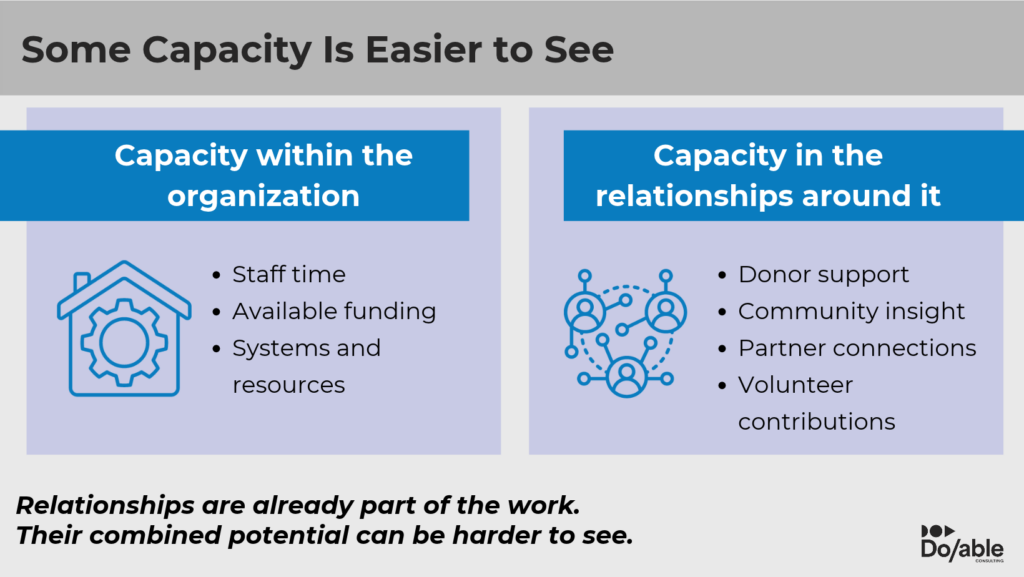
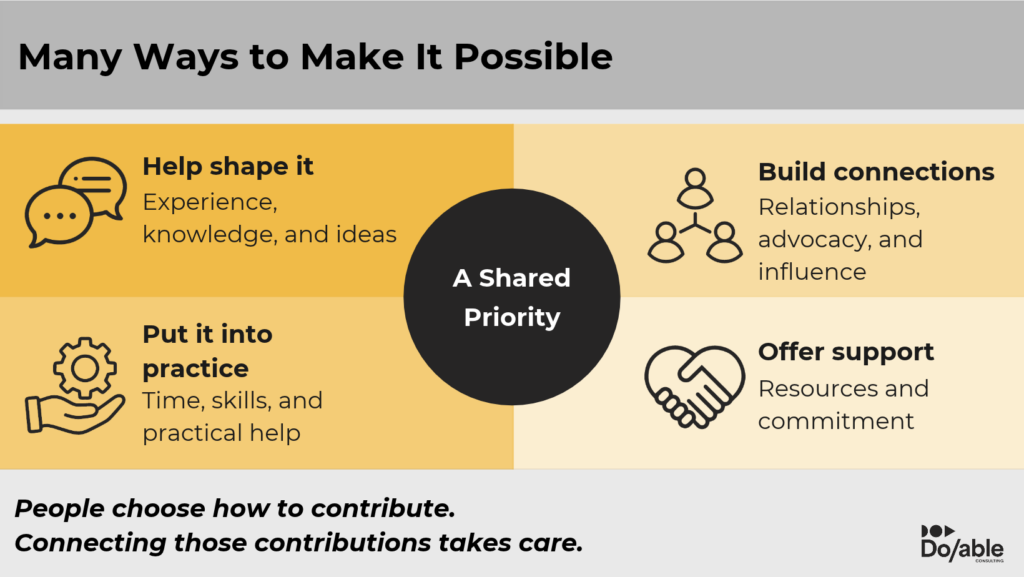
Organizations of every size already engage people in many ways. People accessing services share insight about their experiences. Volunteers’ time and skills can help put ideas into practice, with donors contributing resources to help make it possible. Advocates build support for the work, and partners bring knowledge and capabilities of their own. Each relationship begins with different motivations and expectations. Someone may participate in a service or want to influence its direction while someone else sees a community issue or organization they want to help.
These relationships are often supported through different parts of an organization, and for good reason. Engagement, volunteer support, fundraising, advocacy, and partnerships each call for attention and skill that may come from different staff. The people engaged may nevertheless care about the same change. A strategic priority, a new opportunity, or a big change can offer a place for those interests and contributions to meet.
An organization may discover that a priority has a wider circle of people who care about it than it first appears. There is energy in that discovery. A concern one team has been carrying can become a shared undertaking as people recognize what they value in it and begin to imagine what they might do together.
When a Priority Becomes a Shared Undertaking
Familiar examples can help us see this potential. A hospital seeking an MRI may bring clinicians, patients, donors, and other supporters together around a shared need. A conservancy may invite neighbours, volunteers, educators, and partners to protect a wetland and make it a place for learning. People can see what they might accomplish together and where their own contribution could fit.
That potential is also worth exploring in everyday work, where the connections between people’s contributions may be less obvious at first. Imagine an organization concerned that older adults in a neighbourhood are missing out on a service meant for them. When people talk about their experiences, they describe the uncertainty of arriving somewhere unfamiliar and the difficulty of arranging a ride.
Those conversations might lead people who use the service to help shape a more welcoming first visit. Staff could adjust the program; volunteers with neighbourhood connections might accompany newcomers; and a partner could help make transportation easier. Donors or a funder who care about reducing isolation might help fund a modest trial. As the changes unfold, people could stay involved in understanding what works and what still needs attention.
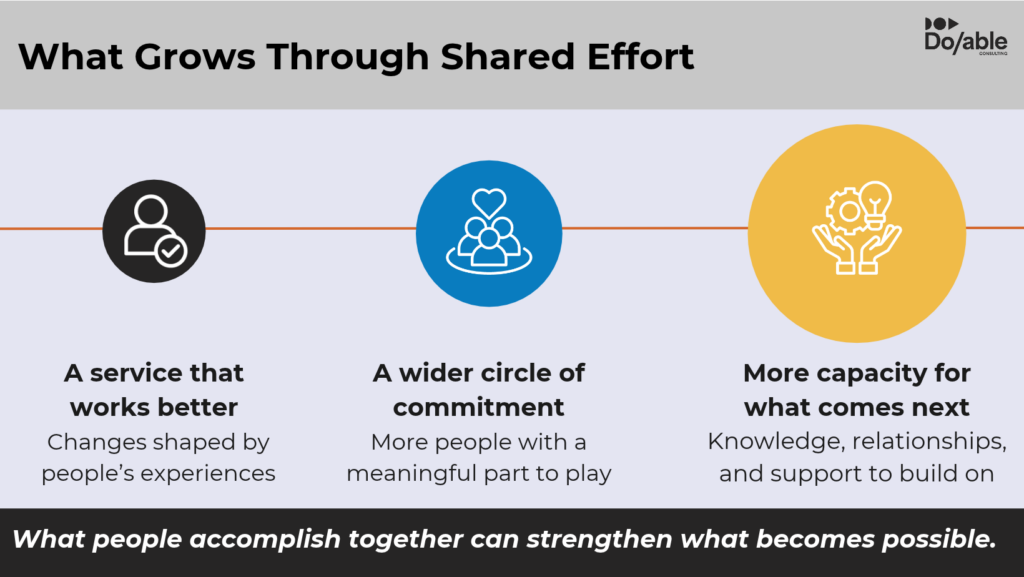
The contributions strengthen one another. The program becomes easier for partners to recommend. Volunteers learn from the people they are helping and can bring those insights back. Participants can influence how the service develops and some may decide to welcome others. A question about access becomes a shared effort around connection, belonging, and the experience of using a service.
There is something important in that shift. People can see where their own interests meet the organization’s purpose and choose a part in carrying it forward. The organization retains responsibility for the service, while relationships bring different kinds of knowledge, commitment, and support to the work. What begins as a practical improvement can develop a wider base of people who care about its success. The service may become easier to access, while the organization and community build stronger relationships, shared ownership, and greater capacity to pursue what matters next.
Making Room for Collective Contribution
Most organizations already have people who care about their work and contribute in different ways. The opportunity may begin by looking at a strategic priority through all those relationships at once. Who shares an interest in its success? What might they want to help shape or advance? What could become possible if those contributions were connected?
Bringing those contributions together takes care. People need meaningful opportunities to influence and contribute to something they care about, in ways that fit their interests and circumstances. Organizations need the time and capacity to nurture relationships, connect efforts, and follow through on commitments. Some people may take part for a short time; others may stay involved or change how they contribute as the work develops.
An organization’s capacity includes the people it employs, the resources it holds, and the systems it has built. It also lives in the relationships it has nurtured with people who care about its purpose. Recognizing those relationships as strategic capacity can change what an organization believes is possible, which opportunities it pursues, and how it brings them to life. A promising idea can become something more people have a meaningful part in shaping, supporting, and carrying forward.
Let’s Keep the Conversation Going
The next time a promising idea meets the question, “How are we going to make this happen?”, perhaps we can also ask who else might care about making it possible and what we might accomplish together.
At Do/able, we help organizations bring people together around shared priorities, recognize the potential in their relationships, and find practical ways to turn that potential into collective effort. We’d be glad to hear what you’re working toward and explore what might be possible together.